

Algyl COLL – Medical Device Profile
Structural Support & Regeneration of the Extracellular Matrix. The active components of Algyl COLL are hyaluronic acid and recombinant collagen. Hyaluronic acid primarily restores the properties of synovial fluid and creates a favourable microenvironment for cellular repair processes. Collagen provides structural support for the extracellular matrix and stimulates its renewal in the cartilage. Both components act on different but complementary aspects of the pathophysiology of OA. The combination of HA and collagen therefore represents a rational therapeutic concept consistent with the current multifactorial understanding of osteoarthritis.
Introduction
Osteoarthritis (OA) is the most common chronic joint disease, and its prevalence is increasing as average life expectancy rises. The aetiopathogenesis of OA is complex and involves degenerative, inflammatory and reparative processes. The degenerative process affects the articular cartilage, synovium, subchondral bone, menisci, ligaments and periarticular muscles. The fundamental pathological processes in OA include a reduction in the hyaluronic acid content of the synovial fluid and, at the same time, the predominance of catabolic over anabolic processes in the articular cartilage. This results in insufficient renewal of collagen as well as hyaluronic acid in the cartilage, loss of its elasticity and its progressive thinning.

The pathological changes in the articular cartilage of patients with OA affect both its cellular component, i.e. the chondrocytes, and the intercellular substance, the extracellular matrix (ECM). Under physiological conditions, chondrocytes produce the components of the ECM in sufficient quantities, particularly type II collagen and hyaluronic acid. Collagen ensures the mechanical strength of the cartilage and forms a fibrillar network that resists tensile forces, while hyaluronic acid bound to aggrecan enables water retention and resistance to compression. It is precisely the synthesis of hyaluronic acid and collagen in chondrocytes, their increased degradation and the subsequent disruption of the highly organised structure of the ECM that constitute a key event in the development of OA.
Hyaluronic acid (HA) plays an essential role in the joint. As the main component of synovial fluid, it contributes to shock absorption in the joint, lubricates the joint and exerts anti-inflammatory effects. It also acts on nociceptors and, owing to its complex effects, has an analgesic effect. At the same time, as an essential component of cartilage, HA also influences its properties. In OA, there is a reduction in both the quantity and quality of HA not only in the cartilage but also in the synovial fluid. This leads to friction, inflammatory changes, pain and, gradually, impaired joint mobility.
Increased degradation and reduced production of collagen represent an essential step in the progression of OA. During the course of OA, chondrocytes are exposed to long-term mechanical stress, oxidative damage and the increasing action of pro-inflammatory cytokines. Under these influences, they begin to produce increased amounts of matrix metalloproteinases, i.e. enzymes that cause collagen degradation and fragmentation of the ECM. The resulting matrix fragments are perceived as foreign, and the immune system responds by further intensifying the inflammatory process, thereby additionally promoting tissue degradation. Once the collagen network has been degraded, the cartilage loses its elasticity and progressive tissue destruction begins.1,2
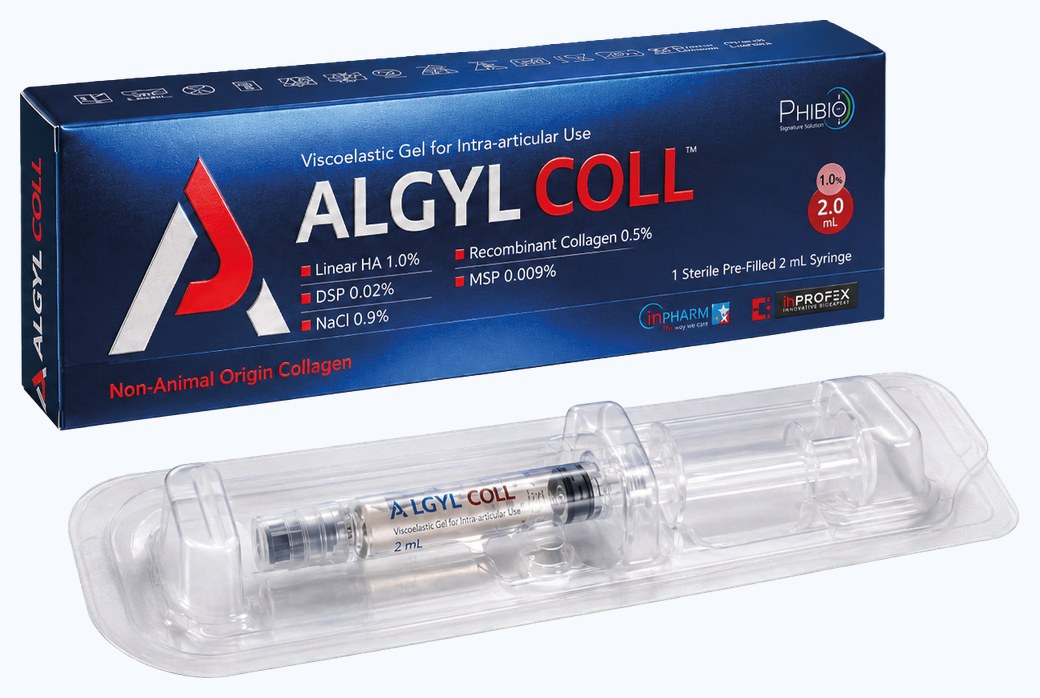
These findings form the basis for the treatment of patients with OA by intra-articular administration of hyaluronic acid and, more recently, by intra-articular administration of collagen. Both components act on different but complementary aspects of the pathophysiology of OA. The combination of HA and collagen therefore represents a rational therapeutic concept consistent with the current multifactorial understanding of osteoarthritis. Hyaluronic acid primarily restores the properties of synovial fluid and creates a favourable microenvironment for cellular repair processes. Collagen provides structural support for the extracellular matrix and stimulates its renewal in the cartilage. The latest trend is the use of recombinant collagen, whose standardised composition corresponds to that of human collagen. ALGYL COLL is an injectable preparation containing a combination of recombinant collagen and hyaluronic acid.
Algyl COLL
Product Description
The active components of Algyl COLL are hyaluronic acid and recombinant collagen. In addition, the preparation contains a buffer component consisting of disodium phosphate/monosodium phosphate to maintain a stable pH, as well as physiological saline solution. The preparation is supplied in a pre-filled syringe and is ready for direct use.
HA
Hyaluronic Acid
The hyaluronic acid contained in the preparation has a linear structure and acts as a tissue lubricant that plays an important role in regulating interactions between adjacent tissues in the joint. It also acts as a viscoelastic support that keeps the internal surfaces in the joint separated and has a number of other beneficial effects in patients with osteoarthritis that have been confirmed in clinical studies. A 2025 review reports that intra-articular administration of HA represents a versatile treatment for OA, providing patients with benefits based on a combination of mechanical effects—viscosupplementation—and a range of additional biological effects. Its diverse mechanisms of action, including anti-inflammatory, chondroprotective and pain-modulating effects, underline its role in the personalised treatment of osteoarthritis. It provides symptomatic relief and a potentially disease-modifying benefit.
The results summarised in the review show convincing outcomes particularly in patients with knee osteoarthritis, or gonarthrosis, in whom this treatment effectively reduces pain and improves joint function. In a number of studies, repeated use of this therapy provided these patients with long-term benefits. According to this review, intra-articular administration of HA is a safe treatment option with a low incidence of adverse effects, mainly transient reactions at the injection site. The authors of the review emphasise that intra-articular administration of HA has become established because of its demonstrated safety, ease of use and patient satisfaction. It remains an integral part of osteoarthritis treatment, particularly in patients seeking non-surgical treatment options. Its efficacy and safety profile support its use, although the treatment regimen must be individually tailored, taking into account the patient’s specific symptoms and needs.3
Collagen
Recombinant Human Collagen
The recombinant human collagen contained in the preparation is a biotechnologically produced protein that precisely replicates the amino acid structure of natural human collagen. It is manufactured using genetic engineering techniques with modified microorganisms. The collagen obtained in this way corresponds to natural collagen in terms of its structure, properties and function. This technology makes it possible to achieve a therapeutic effect without the safety risks associated with collagen of animal origin, such as a non-standardised composition.
The development of modern recombinant technologies has enabled the production of human collagen using genetically modified cellular systems. According to an extensive review published in 2025, recombinant human collagen is one of the most significant biomaterials in regenerative medicine.4 The review highlights its high purity and the possibility of precise molecular design. Because it has an exact, standardised structure, it is highly biologically active. A significant proportion of current research focuses on the use of recombinant collagen as a material for cartilage regeneration.
A laboratory study from 2025 investigated the efficacy of recombinant human type II collagen in the healing of damaged cartilage affected by degenerative changes. The study showed that recombinant collagen effectively promoted chondrocyte proliferation and increased the expression levels of genes specific to the synthesis of endogenous type II collagen in chondrocytes. In addition, the production of aggrecan, which is important for binding to hyaluronic acid and maintaining the physiological properties of cartilage, also increased. Recombinant collagen significantly improved the healing of defective cartilage and, according to the authors, is suitable for improving the condition of cartilage in diseases associated with degenerative cartilage damage, such as osteoarthritis.5
HA + recombinant collagen
Combination of Recombinant Collagen and Hyaluronic Acid
Recombinant human collagen offers a new generation of highly standardised biomaterials that not only provide structural support but can also actively regulate cellular behaviour in cartilage affected by degenerative changes. Hyaluronic acid restores the biomechanical properties of synovial fluid and has significant anti-inflammatory effects. It is also of great importance for maintaining the physiological properties of cartilage.
There is a pronounced biological synergy between the two molecules. HA creates a hydrated environment that supports chondrocyte survival and nutrient diffusion. Collagen provides mechanical support and at the same time activates cellular receptors that regulate the synthesis of the extracellular matrix. The combination of the two substances may therefore have both symptomatic and potentially structural effects.
Another important aspect is that HA reduces friction and mechanical overloading of the cartilage, thereby limiting further degradation of the collagen network. The simultaneous presence of recombinant collagen can facilitate repair of the already damaged matrix. This therefore represents a rational approach targeting both the biomechanical and biological components of osteoarthritis.
Intended Use / Indications
The preparation is intended for the treatment of painful symptoms of joint disorders such as osteoarthritis and inflammatory tendon conditions. In addition, it is indicated for viscoelastic supplementation or replacement of synovial fluid in the hip, knee, elbow and ankle joints.
Contraindications and Adverse Effects
Hypersensitivity to any of the components contained in the preparation; skin infections or joint infections in the area of the intended administration; systemic blood coagulation disorders. Use is contraindicated in patients with a known history of allergy to proteins of Gram-positive bacteria or similar substances. The preparation must not be used in pregnant or breastfeeding women or in children. Patients undergoing chemotherapy should be examined by an orthopaedic specialist before administration. Adverse effects include, for example, pain, joint effusion or joint stiffness, as well as oedema or pain at the injection site. Further details can be found in the instructions for use supplied with the preparation.
Warnings
The product is intended for single use. The preparation should be administered exclusively by healthcare professionals trained in intra-articular injection techniques. The preparation should be administered at intervals determined individually by the physician, for example after 6, 8 or 12 months.
Packaging
The package contains one pre-filled syringe.
Sterilisation and Shelf Life
The medical device is sterilised by autoclaving. The shelf life is 2 years.
Concomitant Treatment Based on Clinical Findings:
ALGYL CBD (Patch)
Composition: Acrylate copolymer, cannabidiol (CBD), Arnica montana extract, menthol.
The preparation is intended for local support of treatment during painful phases, after arthroscopic procedures or following injuries. The combination of purified CBD, arnica and menthol combines anti-inflammatory, analgesic and cooling effects and contributes to pain relief, reduction of swelling and support of physiological healing processes.7-8
Platelet-Rich Plasma (PRP)
In this concept, PRP is not a necessary component of treatment, but merely represents a possible biological augmentation of the protocol at centres that routinely use this method.
When PRP is used together with the hyaluronic-acid-containing preparations ALGYL GGP and Algyl COLL as part of this treatment protocol, published studies indicate that the combination of growth factors with hyaluronic acid may increase the clinical efficacy of PRP.9
Conclusion
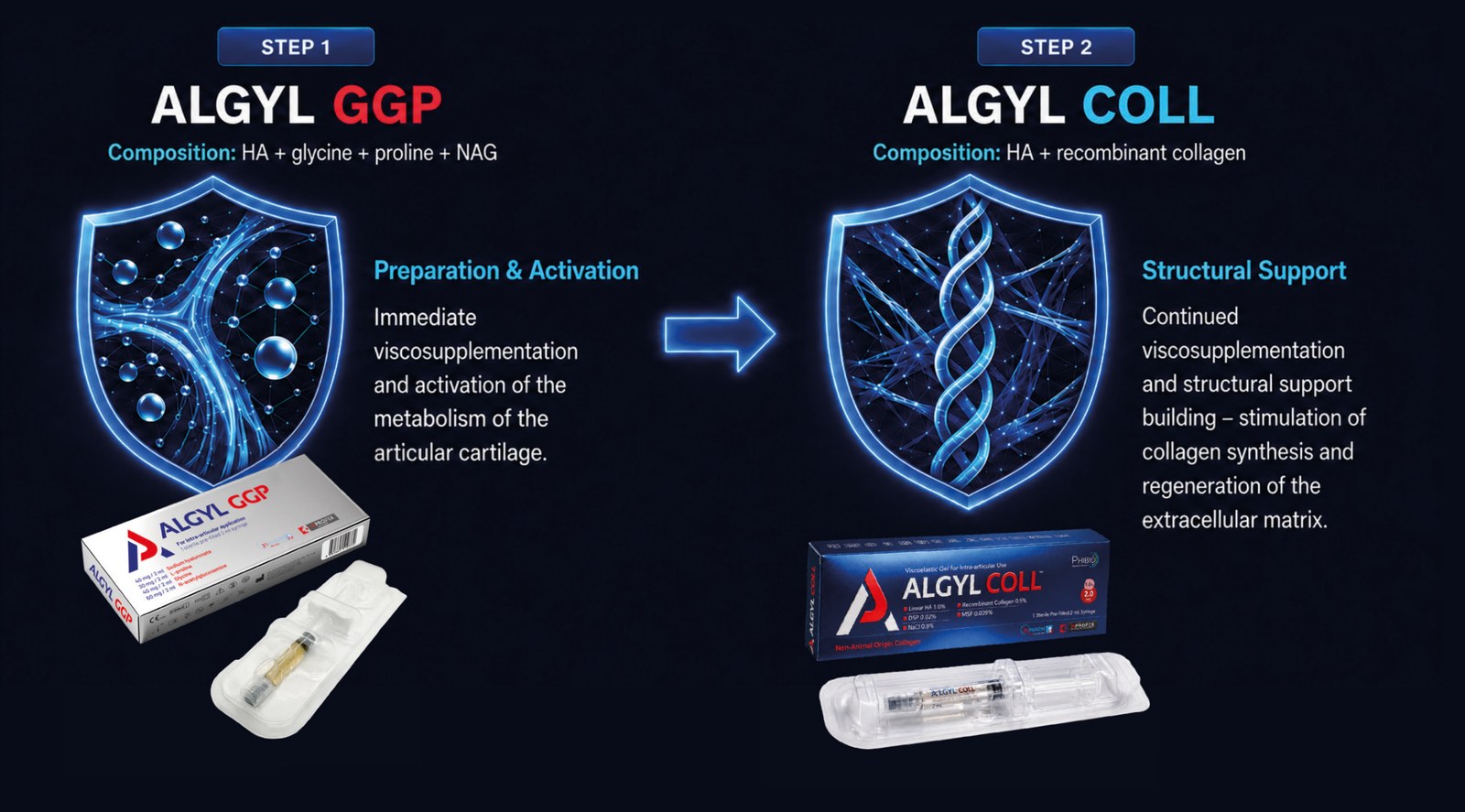
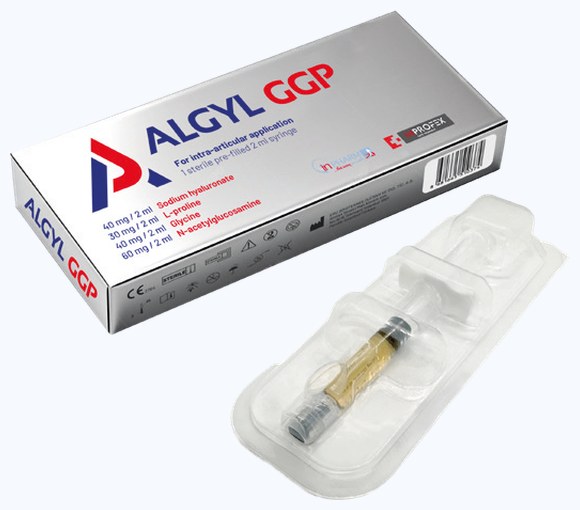
The proposed sequential protocol uses the biological synergy of the individual mechanisms of action. ALGYL GGP initiates regeneration by creating an optimal intra-articular environment and activates cartilage regeneration.
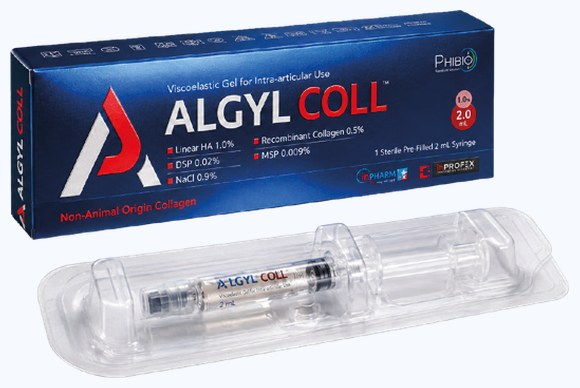
Algyl COLL follows on from this process by further supporting viscosupplementation, stabilising the newly forming extracellular-matrix tissue and providing a structural framework for its further renewal, supporting chondrocyte activity and contributing to the long-term remodelling of cartilage.
The ALGYL CBD patches contribute to pain control, reduction of inflammatory changes and support of healing through the local combination of CBD, arnica and menthol.
The result is a simple, biologically coherent and clinically readily applicable concept based on the mutual synergy of the individual mechanisms of action.3-8
References
- Hunter DJ, Bierma-Zeinstra SMA. Osteoarthritis. The Lancet 2019;393(10182):1745–1759.
- Fox AJS, Bedi A, Rodeo SA. The basic science of articular cartilage: structure, composition, and function. Sports Health 2009;1:461-468.
- Glinkowski W, Sladowski D, Tomaszewski W. Molecular mechanisms and therapeutic role of intra-articular hyaluronic acid in osteoarthritis: a precision medicine perspective. J Clin Med 2025;14:2547.
- Wong Kai Jie I, Lee KWA, Yoon SE, et al. Advancements in clinical utilization of recombinant human collagen: an extensive review. Life 2025;15(4):582.
- Wang C, Zhang Z, Zha Z, et al. Characterization of recombinant human type II collagen from CHO cells, functional assessment of chondrocytes and alleviation of cartilage degeneration. Int J Mol Sci 2025;26(20):10232. doi: 10.3390/ijms262010232.
- Kaval B. Comparison of the effectiveness of conventional intra-articular hyaluronic acid injections with injections of hyaluronic acid enriched with amino acids or amino acids and N-acetylglucosamine in the treatment of gonarthrosis. Faculty of medicine department of orthopedics and traumatology, Tekirdag, 2025.
- Bawa Z, Lewis T, Gavin PD, et al. An open-label feasibility trial of transdermal cannabidiol for hand osteoarthritis. Scientific Reports 2024;14:11792.
- Cs Medica A/S Announces “Proof of Concept” with successful clinical trial results of Cannasen Pain Patch. https://www.cs-medica.com/cs-medica-a-s-announces-proof-of-concept-with-successful-clinical-trial-results-of-cannasen-pain-patch/. Accessed 29.7.2026.
- Cao KX, Tang HNA, Tran MH. Advances in hyaluronic acid therapy for knee osteoarthritis: monotherapy and combination strategies: an evidence-based review. Orthopedic Reviews 2026;18. doi: 10.52965/001c.155103.